
Active Gloucestershire: Reducing the Risk of Dementia
Published on 02 February 2026 05:23 PM

This informative blog from Active Gloucestershire explains how physical activity can significantly reduce our risk of developing dementia.
Dementia is an umbrella term for a group of related symptoms associated with an ongoing decline of brain functioning. Yet, whilst some risk factors can’t be changed; lifestyle choices, especially physical activity, can significantly reduce our risk of developing dementia.
What is physical activity and how much should I be doing?
The World Health Organisation defines physical activity as, “any bodily movement produced by skeletal muscles that require energy expenditure”1. Britain’s Chief Medical Officer’s guidelines suggest that we should be aiming for 150 minutes of physical activity a week (including two strength-based activities a week). However, we know that this can feel challenging for many people and doesn’t always resonate. The good news is that small doses of movement can make a huge difference, with those who go from inactive to incorporating some movement, experiencing the biggest benefits. There is also evidence to suggest that maintaining activity levels during mid-life has the greatest impact on reducing dementia risk.
What counts as movement?
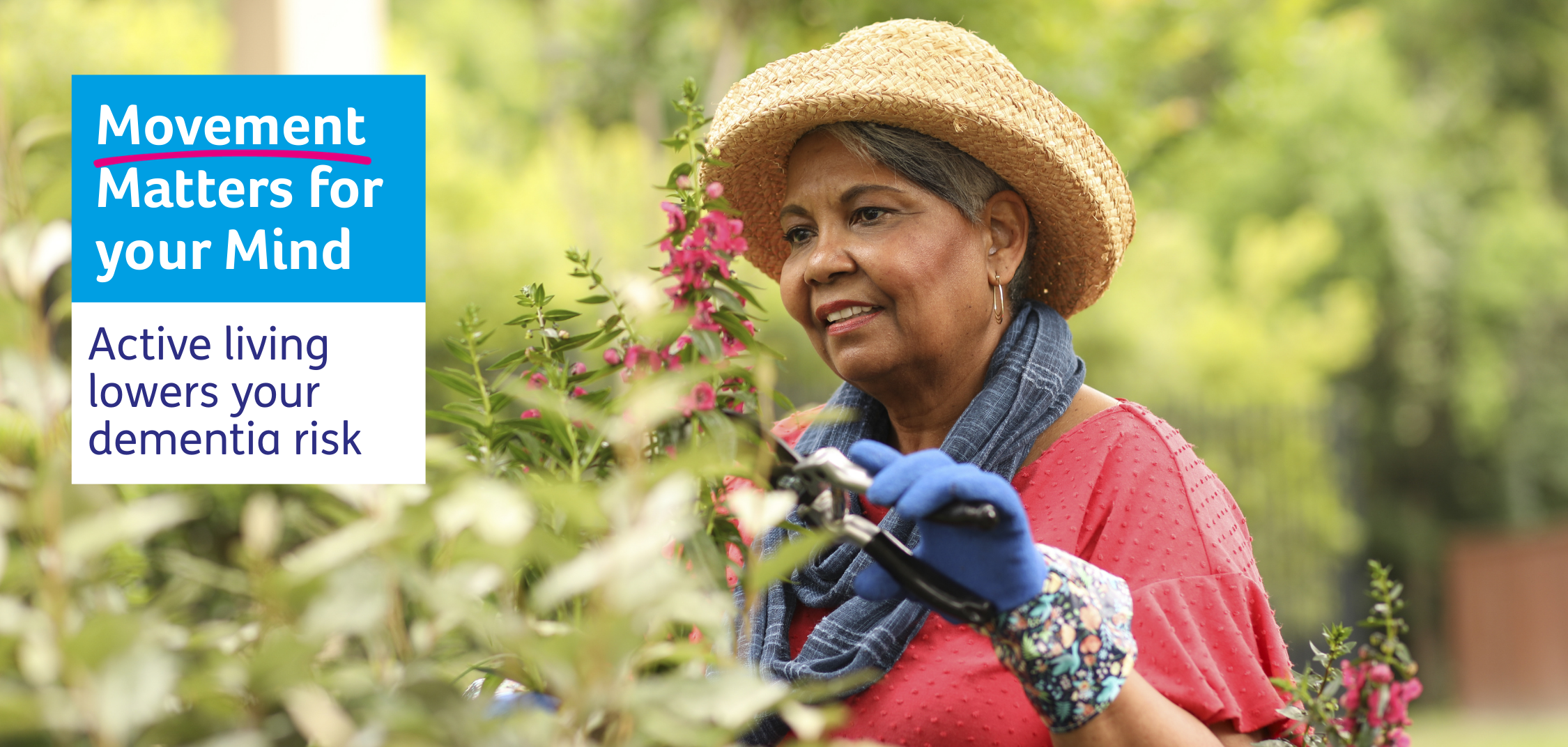
Movement doesn’t need to be lifting weights at a gym or attending a high-intensity exercise class, it can simply involve taking a walk, doing some gardening or playing with your children or grandchildren.
However, there are evidenced benefits to incorporating strength training into our routine such as reducing the risk of falls, strengthening muscles and increasing bone density. Again, this doesn’t mean that you have to become an avid gym-goer; there are several easy-to-follow exercises that you can do at home, for example, the Fall-Proof at home strength & balance plan, or activities such as yoga or tai-chi.
Why physical activity matters
Whilst diseases and other long term health conditions are more common as we age, many, including dementia, are far from inevitable. There are lots of factors that can influence our risk of developing dementia. Some of these, such as age, can’t be changed. However, some factors, such as physical activity, can be influenced.
Physical activity and movement are important for everyone. Regular exercise doesn’t just strengthen muscles; it improves heart health and benefits the brain. According to Alzheimer's Society, regular physical activity is one of the best things that we can do to reduce our risk of developing dementia. There is ample research exploring the connection between physical activity and the reduced risk of dementia. For example, one study highlighted that, when looking at daily activity, people who exercised the least (the bottom 10%) were more than twice as likely to develop Alzheimer’s disease as people who exercised the most (the top 10%).2
Below is a simple overview of how physical activity and movement helps to reduce our risk of developing dementia:
- Physical activity improves blood flow, which in turn, boosts circulation, delivering oxygen and nutrients to the brain.
- Physical activity stimulates the process that encourages the growth of new neurons and strengthens connections between existing brain cells.
- Movement helps lower chronic inflammation, which is linked to cognitive decline.
Other benefits
It is well documented that social interaction is another important factor in reducing our risk of dementia. Group activity provides a great platform to reap the benefits of both movement and social interaction. Lots of activity groups include time before or after the activity to build connections with others, as well as creating a sense of community through social calendars. Starting a new activity can also be a great way to learn new skills, which can also have great benefits for brain and memory health.
As well as helping to reduce our risk of dementia, adding more physical activity into our routine can help to improve our quality of life by supporting us to remain independent and complete daily activities such as shopping, walking and socialising. By becoming more active, we can improve quality of life and spend more time doing the activities we love.
Conclusion
While we cannot change our age or genetics, physical activity is one of the most powerful modifiable risk factors we have. And it’s worth noting that whilst there are guidelines on how much activity we should be aiming to achieve, any movement is good and more is even better. Physical activity and movement provide us with so many benefits. They help us to learn something new and socialise with others. Trying a new activity with a partner, family member or friends seamlessly blends movement, social interaction and skill development, all of which can reduce our risk of dementia. To find out about local opportunities, you can look at directories such as Your Circle or You’re Welcome Gloucestershire, or look at local notice boards, both physical and virtual.
It's also worth remembering, movement is not prescriptive. There are many ways to build more physical activity into our day. Whether we take the stairs more often, park further away, get off the bus one stop earlier, take short movement breaks during work and/or TV adverts, or meet up with friends for a walk - the best way to move is the one that works for us.
We're here to support you.
If you - or someone you care for - has a memory concern, our Dementia, Diagnosis and Memory Support service is here to support you.