
July: Day in the Life
Published on 18 August 2026 10:24 AM
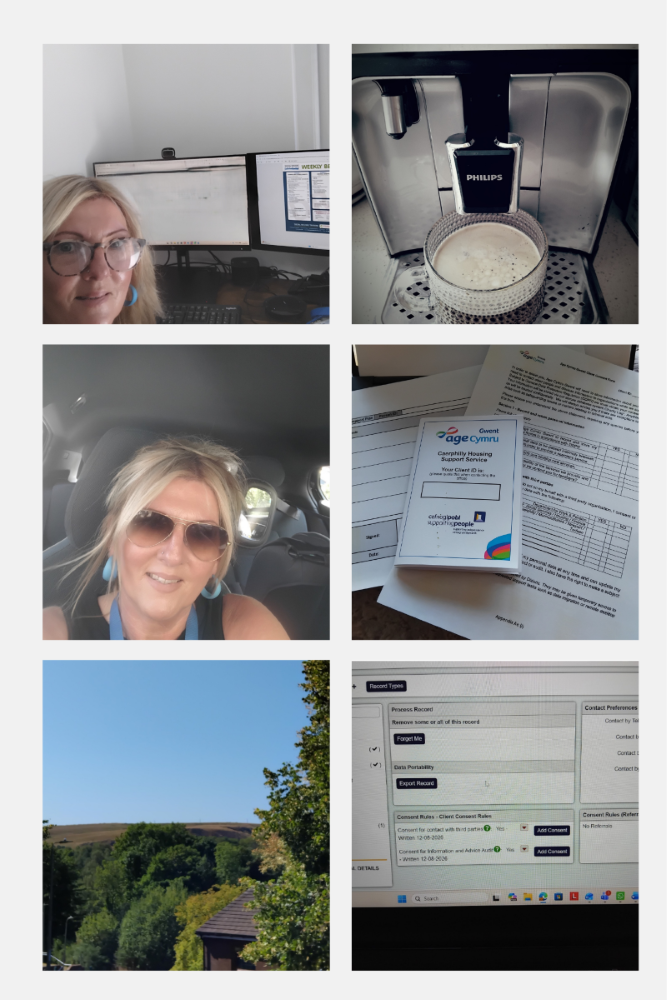
Ever wondered what a typical working day looks like for the people behind Age Cymru Gwent’s services? In our ‘A Day in the Life’ series, we’re getting to know the staff who make a difference to older people across Gwent. Join us as we follow Rebecca, our Benefits Intervention Lead on the Caerphilly MoveOn Service, to discover what their working day looks like, the variety of work involved in their role and what they enjoy most about supporting older people. We’ll also be finding out a little more about Rebecca through a short interview, including what attracted them to their role, what makes their work rewarding and some quick-fire questions to get to know them better!
What is your role at Age Cymru Gwent?
Benefit Intervention Lead/Support Worker for the Caerphilly MoveOn Team.
How long have you worked here?
13 years
What attracted you to working with older/vulnerable people?
I was attracted to working with older and vulnerable people because I wanted to help them become aware of the support and services available to them. Many people find it difficult to access help independently, whether due to health issues, isolation, or not knowing what support exists. I wanted to be the person who made it more accessible for them.
Is there such a thing as a "typical" day?
I don't think there is such a thing as a typical day as a Support Worker. Although there are regular responsibilities, every client is different and their needs can change from day to day. One day you might be helping someone reconnect with their community, and another day you could be supporting them to move into more suitable accommodation, arrange aids and adaptations, manage debt, or deliver a food parcel. You may also provide emotional support and encouragement during difficult times. It's a varied role that requires you to wear many different hats.
What makes the biggest difference to the people you support?
I think the biggest difference to the people I support is when they realise, I'm not there to judge them, but to support them. Once that trust is built, they often feel more comfortable opening up and accepting help.
What's the most rewarding part of your job?
That my support has helped improve someone's quality of life and given them some independence back. Also challenging unfair benefit decisions. Seeing that decision overturned and knowing it has made a real difference to someone's life makes all the hard work worthwhile.
What's one piece of advice you'd give someone considering working in care or community support?
I would say that support work can be challenging at times, but it's also incredibly rewarding. It’s also about learning the value of listening and adapting your approach to meet the needs of your client. As a dear manager once told us, being a Support Worker, you're often a bit like a mini detective. You have to be curious, listen, and piece together information to understand people's needs and help them find the right support. Also, a useful tip from me is – get to know where all the public/supermarket toilets are!