
Befriending: The power of friendship
Published on 02 November 2026 12:01 PM
A cup of tea, a good laugh and a growing friendship: the impact of befriending
Sometimes, the simplest things can make the biggest difference. For Margaret*, who is unable to leave her bed, a regular visit from her Age UK Merton befriender Alexa brings companionship, laughter and something to look forward to. And for Alexa, volunteering has brought a rewarding friendship, new perspectives and a reminder of the difference a little time can make.
For many of us, catching up with someone over a cup of tea is an ordinary part of the week. But for someone who spends much of their time alone, that simple conversation can mean so much more.
Margaret has limited opportunities to socialise or take part in activities outside her home. Since January 2026, Margaret has been matched with Alexa through Age UK Merton's Befriending Service. Their visits have developed into a friendship built on shared experiences, local connections and plenty of laughter.
As Margaret explains, having someone to talk to makes a real difference to her wellbeing.
“I find it being brilliant because it's helped my mental health because I have up days and down days,” she says. “Speaking to someone […] it doesn't matter [which day] because I know that she is going to be here and we have a chat.”
For Margaret, that regular contact provides reassurance and something to look forward to. As she puts it, their conversations are about “putting the world to right”.
More than just a chat
The beauty of befriending is that it doesn't need to involve grand gestures or carefully planned activities. Often, it's about making time for another person, taking an interest in their life and sharing the everyday things that make us who we are.
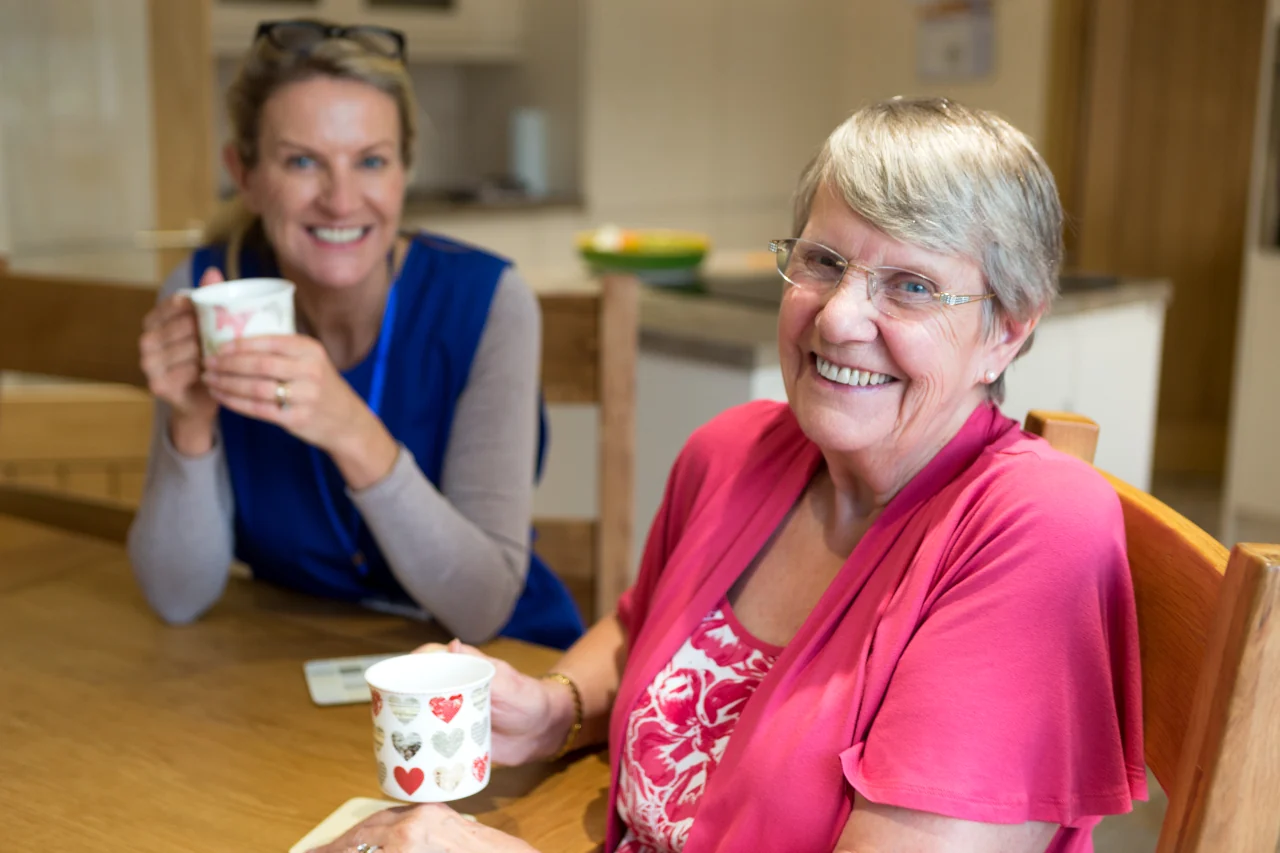
For Margaret and Alexa (left), visits typically involve a cup of tea and a conversation about anything and everything. They talk about everything from what's happening in the news, Alexa’s cat and how their local neighbourhood has changed over the years.
Living on the same street has given them plenty of common ground. Margaret enjoys reminiscing about familiar shops and landmarks, while Alexa learns about the area's history and Margaret's experiences growing up.
"Having the chance to volunteer where you can actually foster a longer-term relationship with one person was particularly appealing to me.”
Their conversations have brought together two people from different generations who might never otherwise have met.
For Margaret, who cannot simply pop out to meet friends or join a local club, these visits provide a valuable opportunity to connect with another person.
“The fact that someone could visit, that my mental health was going to stay stable, I think that's important,” she says.
Befriending doesn't remove the challenges Margaret faces, but it does provide regular, meaningful human contact: a familiar face, a listening ear and a friendship she can look forward to.
A friendship that works both ways
While befriending supports people experiencing loneliness and social isolation, its benefits don't stop with the person receiving the visits.
Alexa first heard about the service through a friend who was already volunteering. She had always wanted to give her time to a good cause and was particularly attracted to the opportunity to build a lasting, one-to-one relationship.
“I kind of work better when I'm one-on-one with someone,” she explains. “So having the chance to volunteer where you can actually foster a longer-term relationship with one person was particularly appealing to me.”
What began as an opportunity to give something back has become a rewarding part of Alexa's own life. She enjoys hearing about Margaret's experiences, learning about a different generation and discovering perspectives she might not encounter among her own friends.
“It's been a really positive and warm experience,” Alexa says. “Every time I leave chatting with my befriendee, I feel like I'm doing a good thing. And I also enjoy the time […] it has benefits for me too.”
She adds that the experience can help lift her spirits when she's feeling a little low herself.
One of the most rewarding aspects has been watching their relationship grow. Alexa has noticed Margaret becoming more comfortable and open as they've got to know each other.
“I can see it in her face that when we chat […] she's opening up to me,” she says. “That's a sign of a blossoming friendship in my eyes.”
For Alexa, seeing that friendship develop has been a particularly special part of volunteering.
Their experiences highlight something fundamental about befriending: it isn't simply about one person giving and another receiving. It's about two people getting to know each other, sharing their time and building a relationship that enriches both their lives.
The difference a little time can make
With busy lives, work and other commitments, it can be easy to assume that volunteering requires more time than we can spare. But befriending shows how setting aside a little time each week can have a meaningful impact.
Alexa's visits usually last around an hour to an hour and 15 minutes. The time is spent chatting, laughing and catching up, rather than following a set agenda.
She is honest that befriending involves a commitment, but believes the rewards make it worthwhile.
“You do need to be willing to put the time in, but what you get in return is tenfold,” she says.
Alexa particularly encourages younger people to consider volunteering, highlighting the value of friendships across generations and the opportunity to learn from someone whose life experiences may be very different from their own.
Margaret shares that enthusiasm. Having experienced the difference a befriender can make, she wants the service to continue reaching people who may otherwise spend long periods without meaningful social contact.
“I had a fantastic experience and I think something like this needs to continue,” she says. “But we do need more people to volunteer.”
Could you make a difference?
Age UK Merton's Befriending Service connects older people experiencing loneliness and social isolation with volunteers who can offer friendship, companionship and a listening ear.
For someone with limited opportunities to socialise, a regular visit can become a valuable part of their week. For the volunteer, it's an opportunity to build a genuine friendship, share experiences and discover just how much can come from giving a little of your time.
You don't need to have all the answers or plan something special. Sometimes, being there, listening and sharing a laugh is enough.
Could you spare around an hour a week to make a difference to someone in your community?
We're looking for volunteers to join Age UK Merton's Befriending Service and help more older people feel connected, valued and less alone.
Find out more about becoming a volunteer befriender on our Befriending Service page or contact our team at befriender@ageukmerton.org.uk or on 02086 485792.
*Some names have been changed at the request of individuals to protect their privacy.
Volunteer for Age UK Merton
Find out more about becoming a volunteer befriender and complete our volunteering form, or contact our team at befriender@ageukmerton.org.uk