
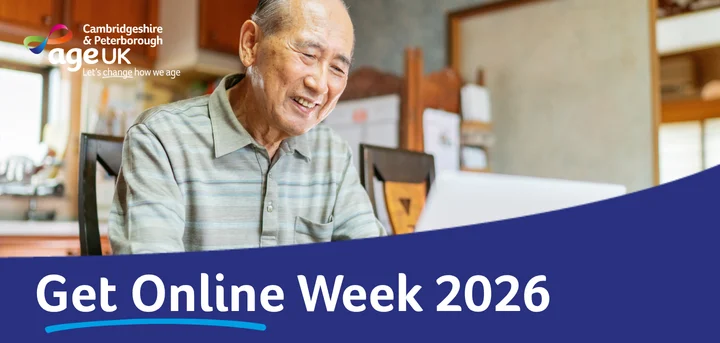
Get Online Week 2026
Published on 19 October 2026 11:40 AM
34 million adults with vulnerabilities are online, and only 1 in 3 adults are comfortably online.
The world had quickly moved online. To book or purchase anything you can do it online but sometimes online is the only option. For some people this creates a barrier. When you can’t get online and don’t have the skills or confidence to navigate the online world, it’s impossible to get by in life.
What is Get Online Week?
Get Online Week takes place from 19th to 25th October 2026 and is organised by Good Things Foundation.
The week aims to raise awareness of digital inclusion and encourage people to get the support they need to feel more confident using technology.
At Age UK Cambridgeshire and Peterborough, we are supporting Get Online Week because we believe everyone should have the opportunity to participate in our increasingly digital society.
Being digitally included doesn't mean being an expert. It can simply mean having the confidence to send an email, use a smartphone, complete an online form or find the information you need.
Why can being online be difficult for older people?
For many older people, technology wasn't part of everyday life when they were growing up.
Smartphones, apps, online banking and websites can feel complicated, particularly when they seem to change all the time. There can also be concerns about making a mistake, losing information or falling victim to an online scam.
Some people may not have a suitable device or an affordable internet connection. Others may have a disability or health condition that makes using a computer, tablet or smartphone more difficult.
And sometimes, the biggest barrier is simply confidence.
If you've never used a particular website before, being told to "just do it online" can feel daunting.
It's important to remember that there is no shame in asking for help.
Digital skills can be learned at any age, and having someone take the time to explain something clearly can make all the difference.
How can you help a loved one get online?
If you have an older relative, friend or neighbour who finds technology difficult, there are lots of ways you can help.
Start by finding out what they would like to do. Perhaps they want to video call family members, look at photographs, book an appointment or find information about something they're interested in.
Rather than taking over and doing everything for them, try to show them how to do it themselves. Be patient and give them plenty of time to practise.
You could also:
- Help them get to know their smartphone, tablet or computer
- Show them how to use email or make a video call
- Help them understand how to recognise suspicious emails, texts and websites
- Write down simple instructions they can refer to later
- Help them find local digital support
- Encourage them to ask for help if they are unsure about something online
Remember, what might seem simple to someone who uses technology every day can be completely unfamiliar to someone else.
Support is available in Cambridgeshire and Peterborough
If you or someone you know is struggling with an online application, finding information or accessing a service, you don't have to manage it alone.
Our Information and Advice service can help:
Our team can talk you through online applications and help you understand information or services that you are trying to access. If we can't provide the support, you need directly, we can help you find the right organisation or service to contact.
There are also other organisations across Cambridgeshire and Peterborough that can help people develop their digital skills and confidence, including local libraries and community organisations.
The important thing is to ask for help rather than feeling that you must work it out on your own.
Getting online can help you stay connected
Being online isn't just about filling in forms or buying things.
It can help you stay connected with friends and family, discover activities in your local community, pursue hobbies, access information and services, and maintain your independence.
For someone who lives alone, being able to send a message or make a video call to a loved one can help them feel more connected.
For someone who finds travelling difficult, being able to access information and services from home can make everyday life easier.
But as more of our lives move online, we must make sure that people aren't left behind.