
85th Anniversary Heritage Project
85 years of Lancashire voices: Preserving memories before they are lost
Age UK Lancashire are proud to be delivering an exciting heritage project to celebrate our 85th Anniversary in 2026.
Supported by the National Lottery Heritage Fund, the project led by Dr Brandon Taylorian as Heritage Project Manager will explore the history of Age UK Lancashire and the experiences of ageing across generations since our founding in 1941.
We are discovering, recording, and preserving the rich memories, stories, and experiences of older people from across Lancashire before they are lost. Through oral history interviews, archive research, and community engagement, we are creating a lasting record of how communities and ageing in Lancashire have changed over the past 85 years.
What we're creating:
- A digital archive of stories and historical materials.
- A professionally produced film.
- A commemorative book and The Handbook of Oral History Methods
- Community exhibitions.
- A time capsule for future generations.
- Opportunities for volunteering, learning and participation.
What we’re discovering: Early insights & themes
With over 125 interviewees already recruited - ranging from WWII veterans to retired school teachers, those born and bred in Lancashire to more recent arrivals, and everyone in between - fascinating insights and social shifts are already coming to light:
One of the most striking findings is that many of the issues discussed more than 80 years ago remain relevant today. Loneliness, social isolation, access to appropriate care, financial insecurity and the importance of maintaining independence were all concerns that shaped the work of organisations supporting older people. As well as these generation-spanning challenges, we have also uncovered newer themes, such as advancements in technology making older people feel isolated and left behind, leading to lack of access to everyday services and needs.
The minute books reveal that supporting older people gradually came to include broader quality of life rather than just about providing practical assistance to support subsistence. Social connections, companionship and opportunities to participate in community life became increasingly important after the Second World War.
Our research has uncovered historical initiatives including older people's clubs, social activities, choir competitions and efforts to help people remain independent in their own homes. These activities demonstrate how the organisation's predecessors recognised the importance of dignity, friendship and belonging in later life.
The records also highlight the changing relationship between voluntary organisations, local authorities and the development of state welfare services. They show how approaches to ageing and older people's welfare evolved over successive decades, while many fundamental concerns remained remarkably consistent.
Powering the project: Meet our volunteers
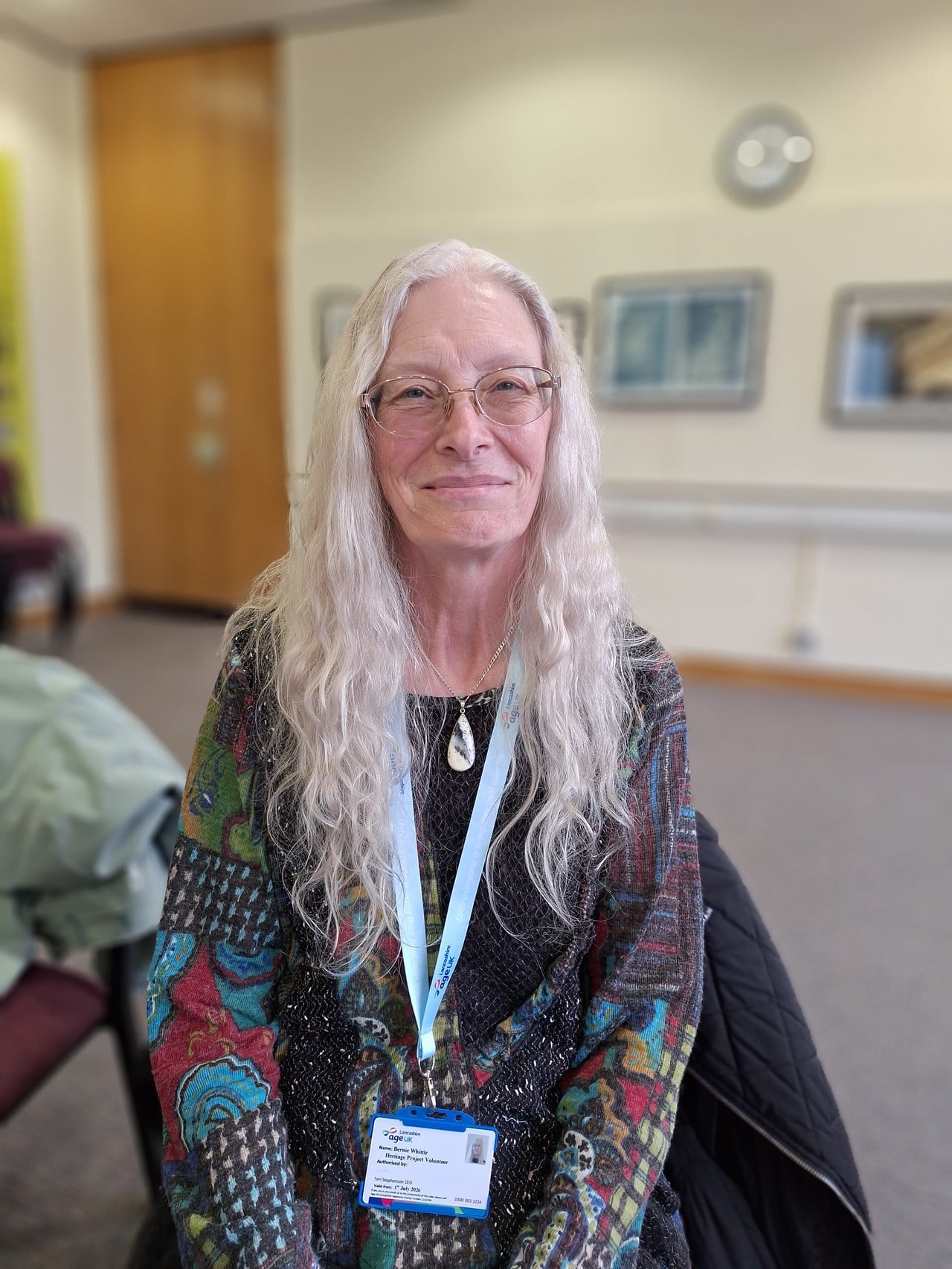
Our project is brought to life by more than 20 dedicated local volunteers gifting their time to conduct interviews and preserve real-life history. Meet Bernie, one of our volunteer interviewers:
In the community:
From day one, community outreach has been at the heart of this project.
Initially, Dr Brandon and our volunteers hit the road, visiting local community groups, social hubs, and open days across Lancashire to ensure we actively sought out diverse perspectives from every corner of the county and captured voices that might otherwise have gone unrepresented.
With this rich cohort of storytellers now established, our focus has expanded to promoting the project county-wide and inspiring local communities to engage with their county's heritage, rediscovering the real, everyday history right on their doorstep.
Our regular volunteer focus groups at Lancashire Archives have provided opportunities to share historical discoveries from the interviews they have conducted, discuss original documents and encourage volunteers to reflect on how life for older people has changed.
We have also held Heritage Days at our very own Day Clubs, bringing our historical research directly into community settings and encouraging conversations about local memories, changing lifestyles and the experiences of different generations.
We are also encouraging intergenerational exchange through project by developing a Family History Detectives activity with a primary school at Bolton-le-Sands and Archbishop Temple High School in Preston. This activity involves the schoolchildren conducting some family history research in their own time with their parents and grandparents and then returning to existing older people's groups to share what they have discovered and whether the older people can add any further context to their research discoveries.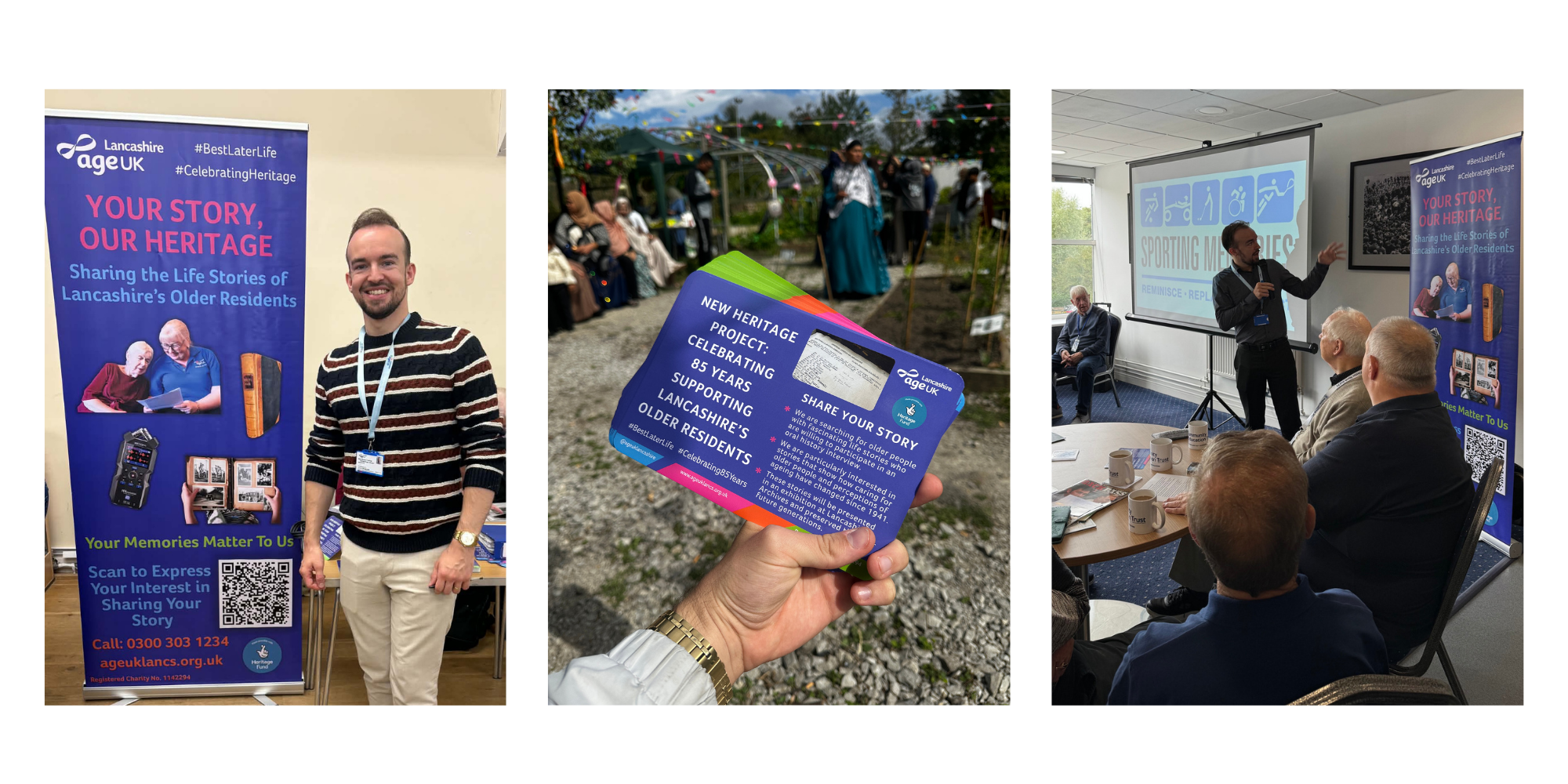
Coming Soon: Exhibitions & Film
-
Lancashire Archives Exhibition (Early 2027): A showcase exhibition displaying curated photographs, oral histories, and physical artifacts collected during the project.
-
Documentary Film Release: A project film celebrating the voices, life stories, and discoveries gathered throughout our 85th anniversary journey.
