
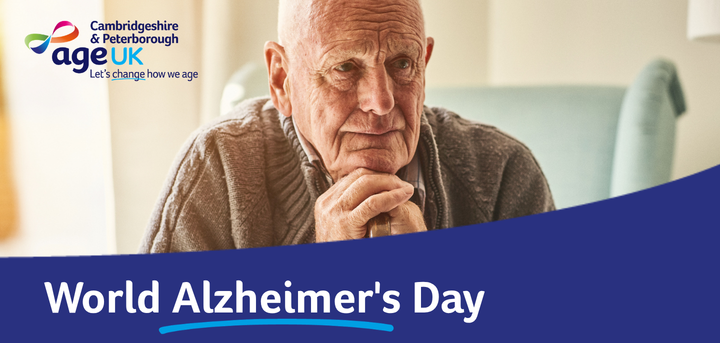
World Alzheimer's Day
Published on 21 September 2026 11:40 AM
A dementia diagnosis can be overwhelming, and it may feel like everything has changed. This World Alzheimer's Day we want to share our information and advice to help support you.
If you've been experiencing problems with your memory or you've found yourself getting confused in familiar places, you may be worried these are signs of dementia. Other conditions can cause these symptoms too, so it's important to speak to your doctor if you're at all worried.
Support
A dementia diagnosis can be daunting, but you don't have to go through it alone. There's lots of help available:
NHS
-
Cambridgeshire and Peterborough Memory Assessment Service - People can be referred to memory services by their GP or directly via another specialist practitioner such as a neurologist or medical staff in another hospital.
-
Older People's Crisis Resolution and Home Treatment Team and Dementia Intensive Support Team -The service provides assessment and short-term intensive treatment (up to six weeks) for older people experiencing a major mental health concern that may otherwise require a period of hospital admission.
Local Charity Support
-
Alzheimer's Society Support Services - Discover local support services, either in person, online, at home or by phone. There is something to suit everyone.
-
Cambridgeshire Handyperson Services - Our Handyperson Service supports older people and adults with disabilities to remain independent, safe, and comfortable in their own homes.
-
Day centres - can provide company and things to do. Some are for older people with or without dementia
Carers
-
Caring Together- This charity supports carers living in Cambridgeshire and works with Cambridgeshire County Council to provide information and support to carers throughout the county. They organise coffee mornings, support groups, advice sessions and more.
-
Dementia Respite Provision, Walking in Your Shoes (Swaffham Prior)- The Dementia Respite Provision was developed to assist family carers who were finding it difficult to access respite, to offer the opportunity for down time and a re-charge.
Could I receive financial support?
It's a good idea to make sure that you're claiming all the financial support that you're entitled to.
Make sure you claim all the benefits you're entitled to. You may be entitled to a disability benefit – either Personal Independence Payment or Attendance Allowance, depending on your age. These aren't means-tested so your income and savings won't be taken into account.
If you have a carer, see if they're entitled to Carer's Allowance. However, if they claim it, any income-related benefits you receive, such as Pension Credit, may be reduced.
Click here to use Age UK's Benefits Calculator
What if I need a lot more help in the future?
It's worth thinking about what you want to happen if your dementia progresses and you need a lot more help. It can be hard to think about the future, but planning ahead can give you peace of mind that your preferences and wishes are known if you can no longer explain them.
There's a range of housing options available to you, including:
Sheltered housing
This is specifically designed for older people and allows you to live independently in your own accommodation. But extra help is available if you need it, such as visits from staff and 24-hour emergency alarm systems. If you have a partner or spouse, you can move in together.
Extra care housing
This is similar to sheltered accommodation, but care is provided as well. Services vary, but this often means that meals are provided and help with personal care is available if needed. The cost depends on how much help you need. If you have a partner, you can move in together.
Care homes
These provide 24/7 personal care and may offer social activities too. Unlike in extra care housing, you don't live in a self-contained home with your own front door.
Care homes with nursing
These provide 24/7 personal care, as well as assistance from qualified nurses.
There is lots of support and information out there. If you need more information to help you decide what is the best support for you, please contact us as infoandadvice@ageukcap.org.uk or call us 0300 666 9860