

Carers Week is an annual campaign, supported by Age UK and a range of other charities, that aims to raise awareness of the challenges faced by unpaid carers and to recognise their immense contributions.
This year, the campaign is focusing on how to build carer-friendly communities, so that carers can get access to the essential services and support they need without compromising their own wellbeing and quality of life.
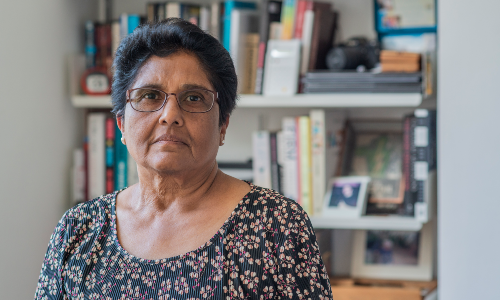
These concerns ring true for Muriel, 80, as she cares full-time for her husband Harry*, who lives with Alzheimer’s disease. Like many carers, Muriel didn’t step into this role overnight. It crept up gradually — small changes at first, then growing responsibilities, until caring became a full-time role.
“We’ve been married for more than 55 years,” she explains. “So of course I’m going to care for him. But nothing prepares you for what that actually means.”
When Harry was finally told he had Alzheimer’s, after delays getting a diagnosis during the pandemic, Muriel hoped it would open the door to more support. Instead, she was left with a stark message: there would be very little help available.
Since then, Muriel has found herself navigating a complex and fragmented system largely on her own. From managing appointments and medication to handling finances, transport, and long-term planning, the role of a carer has become all-encompassing. And without any nearby family members to step in to help, the sense of responsibility is constant. Muriel’s hobbies have fallen away, social time has disappeared, and even rest can feel out of reach.
“It’s like going back to full-time work,” she says. “The admin alone is overwhelming. But I’m also the linchpin. If anything happens to me, everything falls apart. We’re on our own. So you just keep going. You have to.”
We're on our own. So you just keep going. You have to.
A postcode lottery of support
Muriel’s experience highlights something many carers across the country will recognise: support is often talked about, but much harder to access in reality. Knowing where to start — and having the time and energy to do so — can feel like an impossible task.
She’s already learned that where you live can make a world of difference. Muriel lives less than a mile from an area with strong dementia services — but because she falls just outside the boundary, she can’t access them. Instead, she relies on voluntary organisations and local community groups to fill the gaps.
Muriel is particularly thankful for her local Age UK, Age UK Reading, which has provided her with emotional support as well as practical advice on navigating life as a carer. “I’m so grateful for them,” she says. “But it shouldn’t depend on luck or geography.”
For Muriel, even something as basic as transport has become a major challenge. When council-funded transport proved too distressing and unreliable for Harry, she had no choice but to pay privately so he could attend a dementia day centre safely.
The hidden reality of caring
Muriel’s story is far from unique. Across the UK, millions of unpaid carers are providing essential support every day — often quietly, and without recognition.
Many are older themselves, managing their own health while caring for a partner or loved one. And as systems become more complex and increasingly digital, the challenge only grows.
“Everything is online now,” Muriel says. “I can manage, but I don’t know how others cope — especially people with dementia.”
Despite this, carers continue to hold everything together — often at great personal cost.
I don't think people realise what's involved. You don't understand it until you're living it.
Why Carers Week matters
Carers Week is a chance to shine a light on stories like Muriel’s, and to recognise the vital role carers play in our communities. Critically, it’s also a moment to ask: are we doing enough, and what could we do differently?
The mission going forwards is to gather information on the many ways organisations like Age UK Reading and the other charities involved in Carers Week support unpaid carers like Muriel. Muriel’s experience shows clearly that carers need:
- Accessible, consistent support from the point of diagnosis
- Fair access to services, regardless of postcode
- Help with the practical and administrative burden of caring
- Opportunities for breaks, connection, and support
- Recognition as essential partners in care
“I don’t think people realise what’s involved,” Muriel says. “You don’t understand it until you’re living it.”
Caring shouldn’t mean carrying everything alone. With the right support in place, carers like Muriel can continue to care — while still being cared for themselves.
*Names and images have been changed to protect individual's privacy.
Are you caring for a loved one?
We have free information and advice on housing options, arranging care, and more. You can also call our confidential Advice Line on 0800 678 1602 to speak to one of our expert advisers.