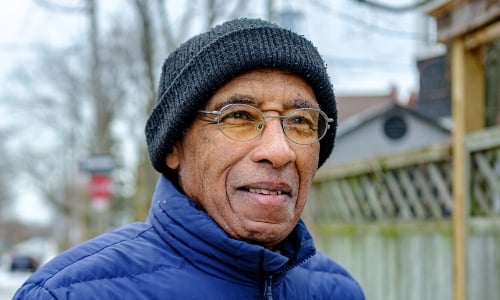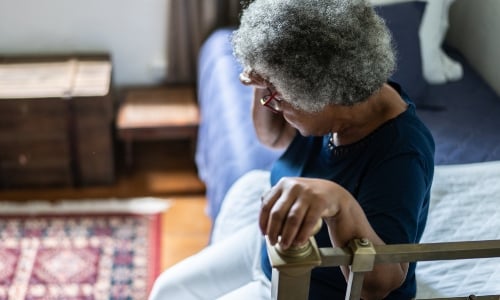


At Age UK, we know that loneliness is creating a crisis hiding in plain sight for older people.
Almost a million people aged 65+ in the UK are often lonely. And whilst loneliness is a year-round problem, as winter draws in, its one that’s often intensified by the shorter, colder days. The festive season, traditionally a time for togetherness, can also be particularly difficult for those who are feeling lonely.
But loneliness is a tricky customer. Lots of us find it hard to talk about our emotions, and loneliness can be a particularly difficult subject to navigate. People experiencing loneliness often do not recognise it themselves, and when they do, stigma and a lack of confidence and information can prevent them from accessing services.
It’s easy for medical professionals and those who care for older people to feel helpless in the face of these challenges, as if there’s nothing that can be done. But as daunting as this challenge can seem, research shows that we shouldn’t underestimate the apparently small things that can make a big difference.
That’s why we’re sharing five practical steps that health and care professionals can take to help tackle loneliness and support older people this winter.
1. Words of encouragement
Conversation has the power to change lives, but sometimes it’s hard to know how to start a conversation about loneliness. Having a couple of prompts in mind can help when the words are hard to find. You could try something like: “I’ve noticed that you don’t seem yourself. Is it OK if we talk about it?”
You don’t need to be able to ‘fix’ someone’s loneliness to have an impact. Sometimes a simple acknowledgement that someone is struggling is enough.
2. Readiness to meet the moment
If an older person opens up to you about feeling lonely, having information at your fingertips about local services that can help can make all the difference.
A good first step is to develop an up-to-date awareness of what local specialist services and experts including VCSE partners (Voluntary, Community and Social Enterprise organisations) can offer, as well as Age UK's Silver Line Helpline and Telephone Friendship Service. Be proactive about understanding how to refer an older person for this support. Identify and share good practice initiatives with your team too.
3. A warm referral
When we’re feeling low, a little extra support goes a long way. Better than simply signposting is to provide a warm referral to a new service. For example, asking “would you like me to book an appointment for you now?” and “can I go with you/arrange for someone to go with you?” can mean the difference between someone feeling able to take the next step or not.
Aim to end the conversation positively by reassuring them that it’s possible to feel better with the right support (“there is help out there when you’re ready”).
4. A friendly welcome
Don’t underestimate the power of a warm welcome into your service, wherever you are. Greet people as they arrive – have an initial chat, make them a drink, ensure that they feel supported while waiting to access the relevant person. A friendly smile, being welcomed into a space and being made to feel safe and seen, can all mean the difference between a person returning or retreating from support.
5. Identify volunteering opportunities
It might seem counterintuitive to ask a person who is feeling lonely if they can help us, but evidence suggests that it’s not such an odd request.
For example, many volunteers on Age UK’s Silver Line report that the relationship between ‘the helper’ and ‘the helped’ isn’t so clear cut. Volunteers report feeling trusted, drawn out of their own problems, and helped by those people calling in for support. Recognising what a person has to offer can help to foster a sense of mutual belonging and purpose. We all have something to give, and we all have something we need.
Loneliness is later life is not inevitable
In summary, becoming more ‘loneliness literate’ is something we can all do to help older people this winter and year-round, and to challenge attitudes that loneliness is inevitable in later life.
Just as there is no ‘typical’ older person, there isn’t a ‘one size fits all’ solution to loneliness. The good news is that this means we can and must get creative in our efforts to help people to develop their own pathways out of loneliness. Even small actions can make a big difference to someone who's feeling lonely. We hope these five steps offer a good place to start.
Learn more about loneliness
We have a host of free resources and case studies available about experiences of loneliness, what helps, and how the right actions can make a big difference.